
Construction Productivity Control: Linking BOQ Quantities, Man-Hours and Production Rates
Productivity is often discussed as a labour problem when it is actually a systems problem. Reliable productivity control requires a common measurement basis that connects planned quantity, installed quantity, crew hours, equipment support, work conditions and remaining scope. Without that structure, manpower curves can look precise while the forecast remains weak.
Choose the measurable production unit
Define the physical unit that represents progress for each work type, such as cubic metres of concrete, tonnes of steel, metres of cable, square metres of formwork or installed equipment units. The unit must reconcile with BOQ or controlled quantity records so schedule, commercial and field teams are measuring the same work.
Separate production rate from labour productivity
Production rate describes output per period, while labour productivity describes output per labour-hour or labour-day. A crew can increase daily output by adding people while becoming less efficient per man-hour. Both measures are needed to understand whether acceleration is truly productive.
Build the required-rate forecast
Calculate remaining quantity, available working days and the production rate required to meet the target date. Compare that required rate with demonstrated recent performance. If the required rate is materially above achievable performance, the planner should expose the gap rather than assume the target will be met.
Explain lost productivity with field causes
Low output should be connected to causes such as late materials, access restriction, rework, equipment downtime, permit delay, inspection hold, congestion, weather, incomplete engineering or fragmented work fronts. This turns productivity data from a scoreboard into an operational diagnostic.
Link quantity progress to schedule and cost
Installed quantities can support physical progress, earned value, billing, manpower forecasting and completion estimates when they share a controlled coding structure. The strongest model links WBS, activity, BOQ item, location and work package so one field record can support several project-control processes.
Use trends to manage the remaining work
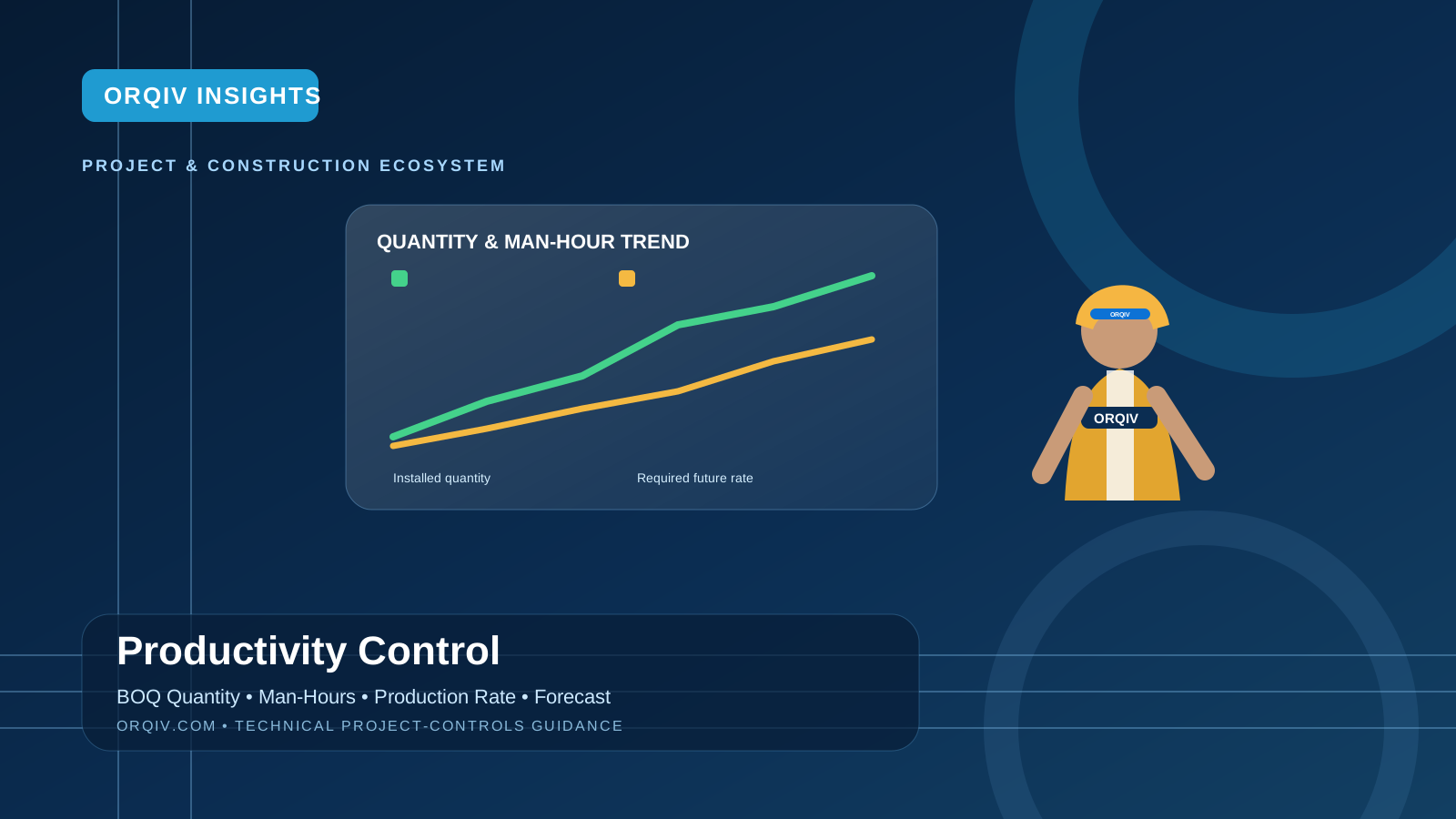
Track planned rate, actual rate, rolling average, required future rate, cumulative quantity and labour efficiency over time. ORQIV should highlight when the remaining target requires a step-change in performance and show the constraints that must be removed for that step-change to be credible.
Move from guidance to governed workflow.
ORQIV publishes practical project-control guidance publicly while keeping customer data, proprietary algorithms and private implementation details inside the governed product boundary. Review methodology is documented in the Editorial Policy.