
Baseline vs Update vs Recovery Schedule: What Can Change and What Must Stay Controlled
Baseline, update and recovery schedules serve different control purposes. Treating them as interchangeable can destroy the audit trail that explains how the project moved from the original plan to the current forecast. Strong schedule governance preserves each layer and makes every material change visible.
The baseline is the approved planning reference
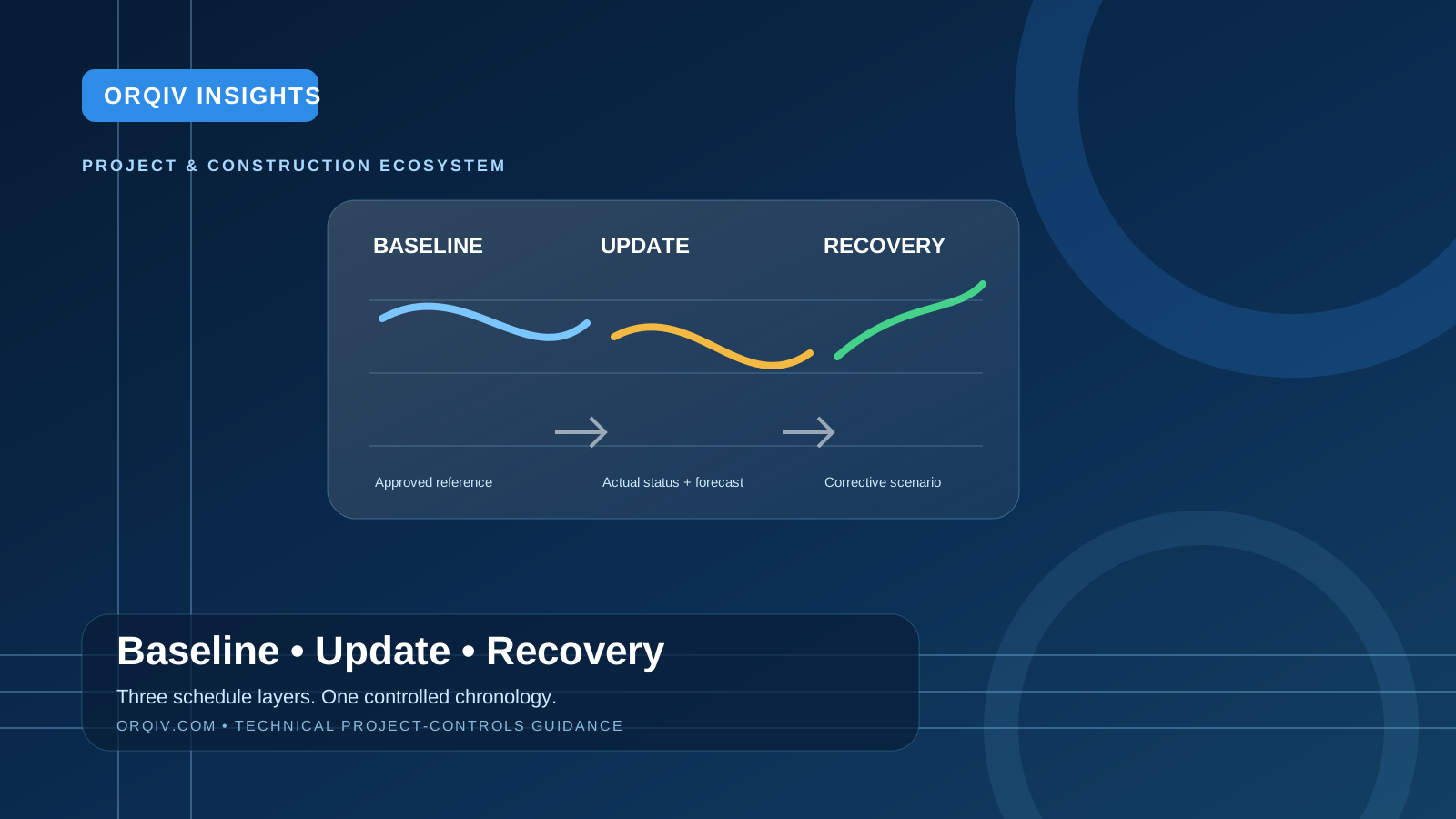
The baseline records the accepted scope sequence, calendars, contractual milestones, planned dates and resource or cost assumptions at the point of approval. It should not be silently rewritten every time conditions change. Approved changes can be incorporated through a governed rebaseline process, but the previous reference must remain traceable.
The update records actual status and current forecast
A periodic update applies actual starts, actual finishes, remaining durations, progress, revised logic where legitimately required and current constraints. Its purpose is to show where the project stands at the data date and what the network now forecasts. The update should explain variance against the approved reference rather than erase it.
A recovery schedule is an intervention scenario
Recovery planning tests how delayed or threatened milestones may be improved through resequencing, additional shifts, alternative methods, resource changes, procurement actions or parallel work. Recovery assumptions need explicit ownership and feasibility checks because compression that is mathematically possible may not be physically executable.
Control logic and calendar changes
Logic rewiring, calendar changes, constraint edits and duration reductions can materially alter the critical path. These changes should be classified, justified and compared with the prior revision. A schedule can appear healthier simply because the network was changed, so governance must separate real progress from modelling changes.
Keep a revision evidence trail
For each accepted revision retain the source file, data date, schedule ID, change summary, key path movements, milestone variance, logic edits and approval context. Revision comparison should make it possible to reconstruct why a forecast changed without relying on personal memory.
Use each schedule for the correct management question
Use the baseline to measure variance, the update to understand current position, and the recovery schedule to evaluate corrective action. ORQIV should preserve these as linked but distinct records so management can compare planned intent, actual evolution and proposed intervention without losing chronology.
Move from guidance to governed workflow.
ORQIV publishes practical project-control guidance publicly while keeping customer data, proprietary algorithms and private implementation details inside the governed product boundary. Review methodology is documented in the Editorial Policy.