
Construction Lookahead Planning: How to Turn a 2–6 Week Plan into a Real Control System
A lookahead should not be a shorter copy of the baseline schedule. Its job is to convert the medium-term programme into executable field commitments by exposing what must be ready before each work front can start. When readiness, quantities, resources and constraints are connected, the lookahead becomes a control system rather than a reporting ritual.
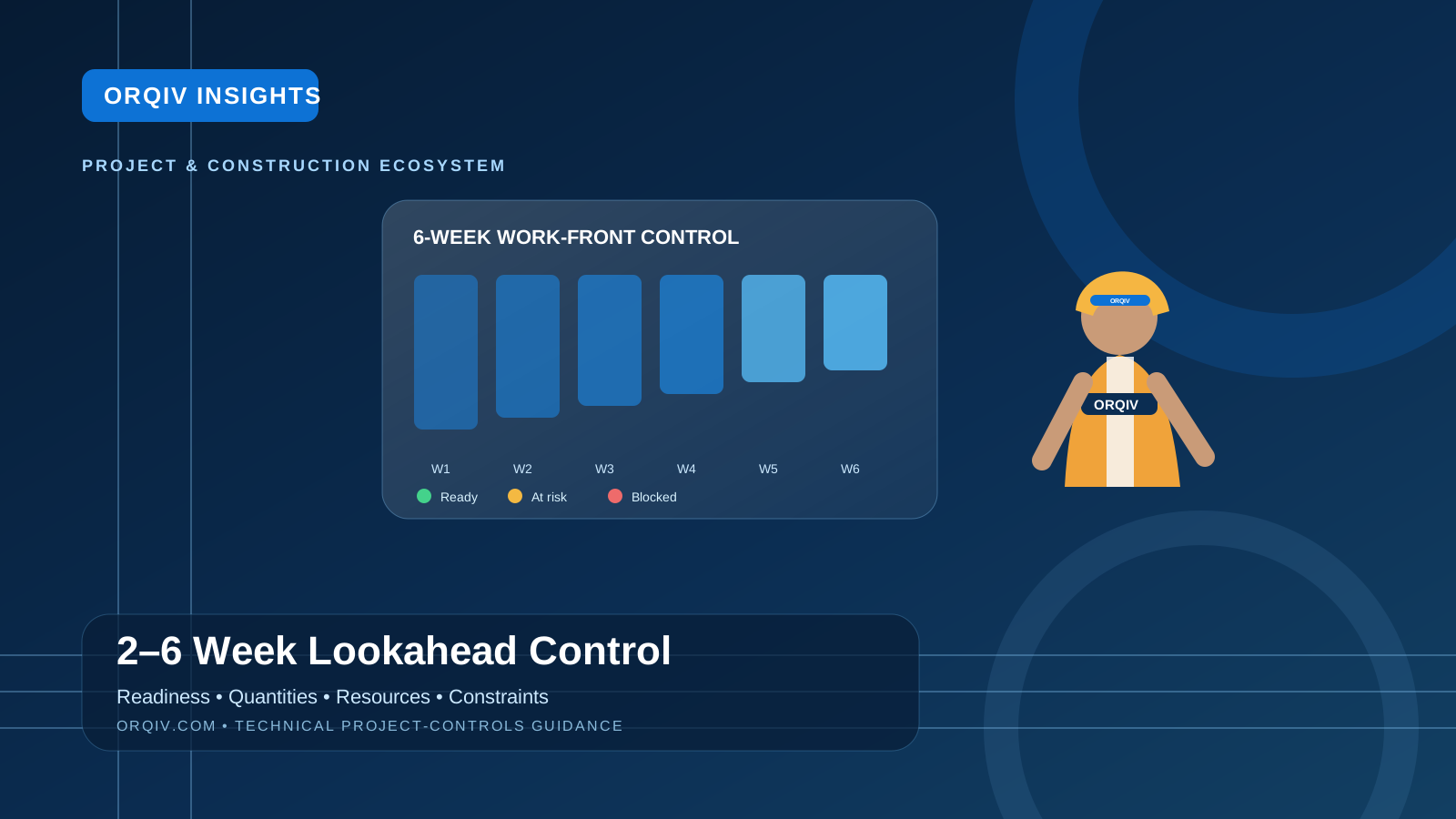
Start from the CPM network, then add execution detail
Select activities that fall inside the chosen two-to-six-week horizon, but do not stop at activity names and dates. Break the near-term work into controllable work fronts, locations or measurable packages. Preserve traceability to the schedule activity so field progress can still roll back into the approved programme.
Define a work-front readiness gate
Every planned task should have explicit readiness checks for approved drawings, materials, access, predecessor completion, permits, method statements, inspections, temporary works, labour, equipment and specialist support. A task that fails a mandatory readiness check should be visible as constrained before the planned start date.
Plan quantities and production, not only headcount
Manpower should be derived from the quantity to be installed, expected production rate, working hours and available working days. This allows the planner to test whether the proposed crew can physically achieve the planned output and whether the quantity forecast is consistent with the schedule duration.
Turn constraints into owned commitments
Each blocker needs a named owner, required-by date, status, evidence and escalation threshold. Material approval may belong to Procurement, access to Site, drawings to Engineering and inspection release to QA/QC. The lookahead becomes powerful when cross-functional commitments are managed in one visible queue.
Use daily progress to challenge the weekly promise
Actual installed quantity, crew size, lost hours, equipment availability and constraint events should update the short-term forecast. If production is below the required rate, the team should see the completion risk early enough to change sequence, resources or work-front strategy before the weekly target is missed.
What ORQIV should control
A connected ORQIV lookahead should link schedule activities, WBS, locations, quantities, resource demand, materials, documents, inspections and constraint ownership. The key output is not a prettier plan. It is a reliable answer to three questions: what are we promising, what could stop it and who must act before the commitment becomes late.
Move from guidance to governed workflow.
ORQIV publishes practical project-control guidance publicly while keeping customer data, proprietary algorithms and private implementation details inside the governed product boundary. Review methodology is documented in the Editorial Policy.