
AI Agents in Construction Project Controls: Automate the Work, Keep the Decisions Governed
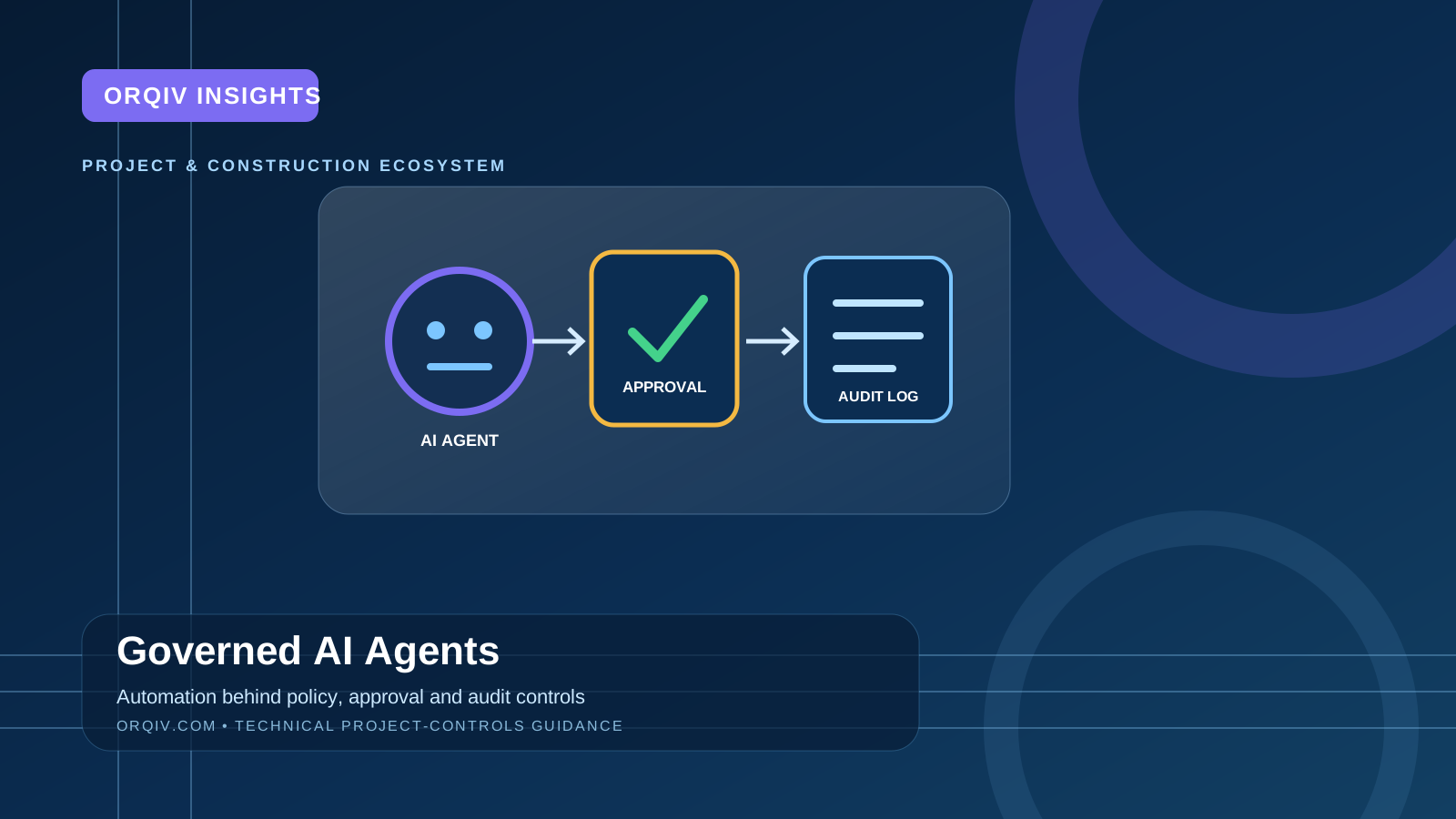
AI agents can reduce repetitive project-control work, but construction systems cannot treat every generated action as automatically authorized. The strongest operating model separates analysis from consequence: agents can read, reconcile, calculate and propose broadly, while writes that change commercial, contractual, financial or controlled project records pass through explicit policy and human approval.
Start with read-only shadow mode
Before allowing an agent to change project data, let it observe approved sources and produce recommendations beside the existing human process. Compare its outputs with planner, QS, procurement or document-control decisions. Shadow mode exposes data gaps, ambiguous rules and failure modes without creating production consequences.
Use a default-deny tool gateway
Agents should not receive unrestricted database or application access. Each tool should be allowlisted by agent role, project and action type. Read operations can be broader where appropriate, but create, update, approve, issue, delete or transmit actions should require explicitly granted capability and, where consequential, human authorization.
Make retries safe and idempotent
Automation must assume network failures, repeated messages and resumed workflows. A robust job carries a stable idempotency key so the same approved action cannot create duplicate purchase requests, reports, documents or workflow records when retried. Exactly-once intent matters more than simply rerunning until something succeeds.
Preserve an immutable audit trail
Log the agent identity, user context, project, tool, timestamp, payload hash, response hash, approval reference and final outcome. This allows the organization to reconstruct what the agent saw, what it proposed, who approved the consequential step and what the system actually changed.
Keep humans at the correct control points
Human approval is most valuable where the action changes contractual position, financial commitment, official status, external communication, safety or quality acceptance. Low-risk repetitive analysis can remain automated. The goal is not to insert approval into everything, but to place approval where authority and accountability genuinely matter.
Design agents around project-control roles
A Planning Agent can test schedule health and prepare lookahead exceptions; a QS Agent can reconcile quantities; a Procurement Agent can flag need-date risk; a QA/QC Agent can prepare controlled documentation checks. ORQIV's model should keep these agents inside one governed orchestration layer so automation increases speed without creating parallel records or invisible decision paths.
Move from guidance to governed workflow.
ORQIV publishes practical project-control guidance publicly while keeping customer data, proprietary algorithms and private implementation details inside the governed product boundary. Review methodology is documented in the Editorial Policy.