
Procurement Schedule Integration: Connecting MR, RFQ, PO, Delivery and MIR to the Need Date
Procurement becomes a schedule-control discipline when every package is driven by a real need date rather than a generic status label. The essential question is not whether a purchase order exists. It is whether the complete procurement chain can deliver an approved, usable item before the construction activity needs it.
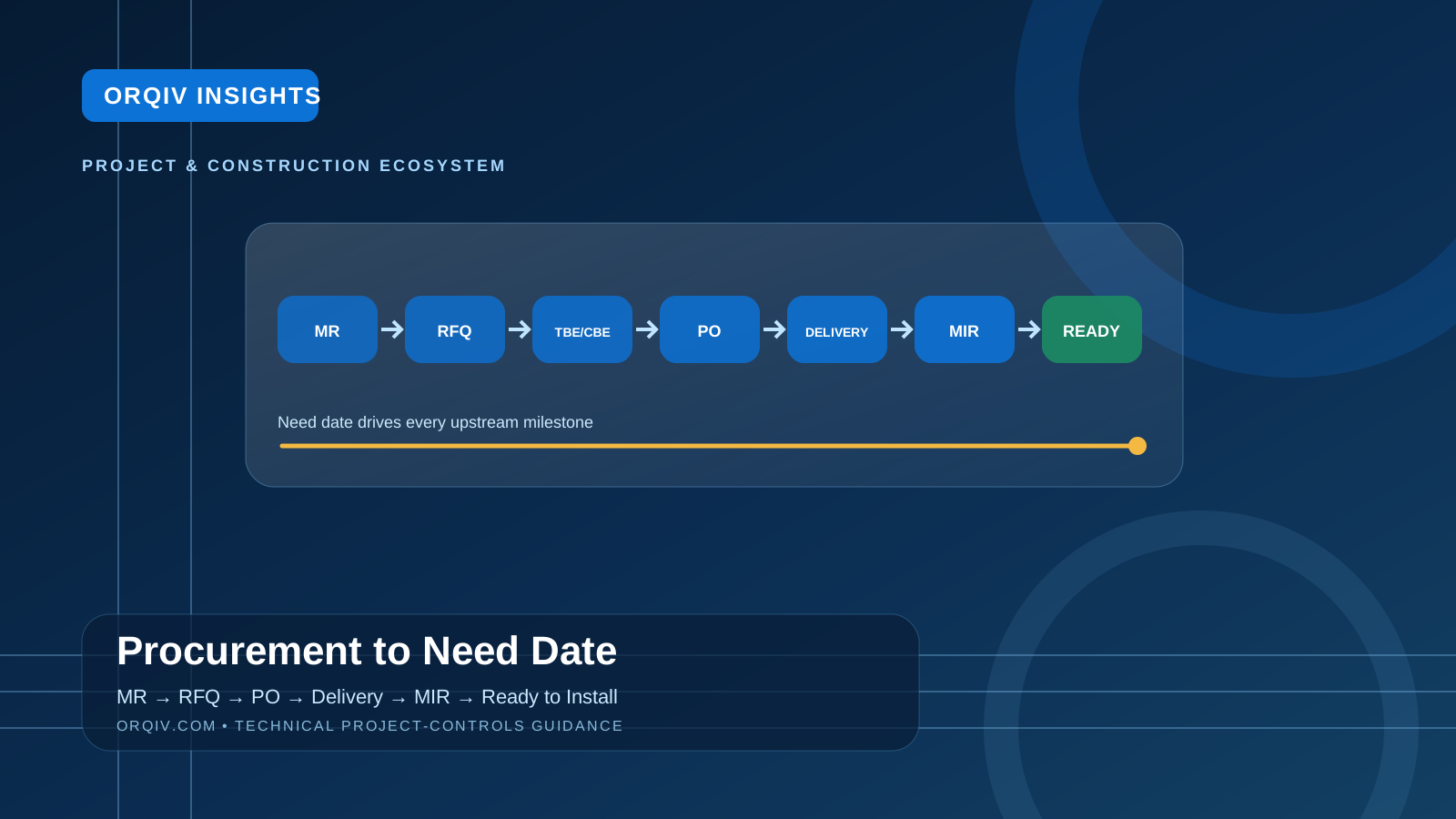
Start with the construction need date
Derive the required-on-site date from the activity or work-front plan, then work backward through inspection, receiving, transport, manufacturing, purchase order, technical evaluation, commercial evaluation and RFQ stages. This creates a procurement schedule that is anchored to execution rather than administrative sequence.
Control every handoff in the procurement chain
MR, PR, RFQ, bid receipt, technical bid evaluation, commercial evaluation, PO, vendor document approval, manufacturing, inspection, shipment, delivery and MIR should each have planned and actual dates, ownership and evidence. A single overall procurement percentage cannot show which stage is actually causing risk.
Separate delivery from usable readiness
An item arriving at site is not necessarily ready for installation. Receiving inspection, MIR approval, preservation, storage, documentation, testing, damage resolution or missing accessories can still block the work front. The schedule interface should therefore track both physical arrival and release-for-use.
Prioritize by schedule consequence
Procurement teams should see which packages support critical or near-critical activities, how much float remains and when an approval delay becomes a milestone threat. This helps prioritize expediting and management attention using project consequence instead of whoever escalates most loudly.
Measure lead-time reliability
Track planned versus actual cycle time by category, vendor and stage. Repeated technical submittal rejection, slow commercial approval, late manufacturing or customs delay should be visible as trends. Historical performance then improves future procurement planning and vendor evaluation.
Create one procurement-to-field control chain
ORQIV should connect procurement package IDs to BOQ items, schedule activities, vendors, approvals, logistics, MIRs and field demand. The value is a single chain of evidence from 'needed by' to 'ready to install', with early-warning logic when any stage consumes available schedule margin.
Move from guidance to governed workflow.
ORQIV publishes practical project-control guidance publicly while keeping customer data, proprietary algorithms and private implementation details inside the governed product boundary. Review methodology is documented in the Editorial Policy.